About Zebra Isopods
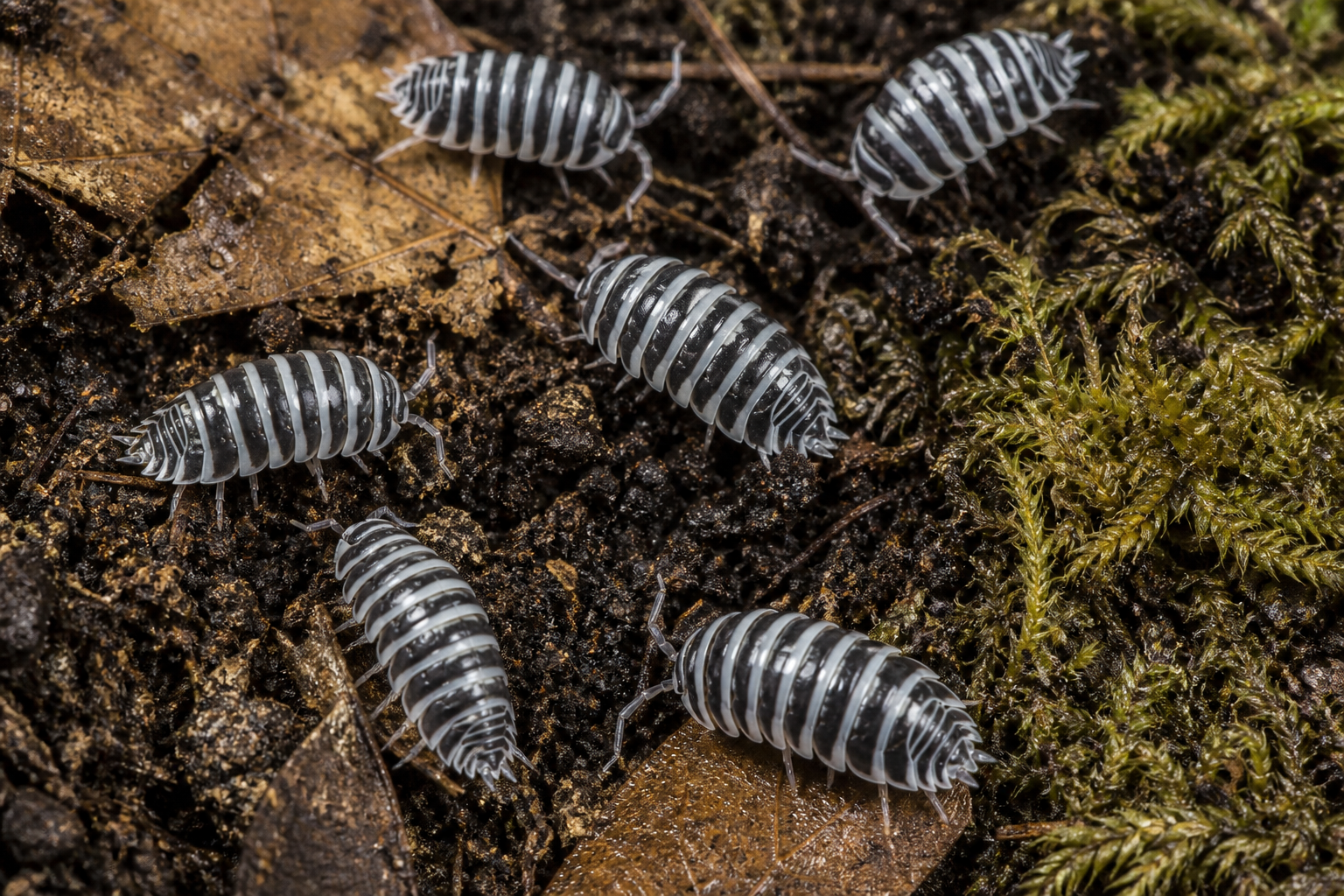
Armadillidium maculatum, the Zebra Isopod, is hard to miss: bold black-and-white stripes and a habit of rolling into a tight ball when startled. They come from southern France and the Mediterranean. Zebras forgive beginner mistakes better than most Cubaris and work well as a first species or clean-up crew.
Natural history & background
In the wild, A. maculatum lives in limestone scrub with hot, dry summers. They hide under stones and leaf litter by day and feed at night. The striping blends in with dappled leaves on the forest floor.
Housing & enclosure setup
A ventilated 6 qt tub suits a starter group of 10–20. Armadillidium want more airflow and a drier setup than Cubaris. Do not run them in a sealed tub.
Add cork bark, leaf litter, and cuttlebone. A bit of limestone in the substrate matches their native soil.
Substrate & environment
Coconut coir or peat with leaf litter and limestone. Keep a moist corner and let 40–50% of the tub stay drier. Too wet stresses them and grows mould.
Temperature & humidity
- Temperature: 18–24°C (65–75°F)
- Humidity: Moderate; 50–65% with one damp corner
Diet & nutrition
Staple: Oak leaf litter.
Supplements: Vegetables, fish flakes once a week, cuttlebone always in the tub. They need less protein than Porcellio but still benefit from some.
Breeding
Moderately prolific. Expect broods of 20–40 mancae after 2–3 months in a new culture. Babies look like mini adults and show up on leaf litter within days.
Common issues & troubleshooting
Not rolling into balls
- Some individuals just do not. Not a health issue. Only Armadillidium and a few relatives conglobate.
Stripes fading
- Usually diet. Vary the leaf litter and keep calcium available.
Mould in damp corner
- Add springtails, mist less often, improve ventilation.
Slow breeding in winter
- Normal. Reproduction picks up above 18°C.