Pronunciation
por-SEL-ee-oh
/pɔːrˈsɛli.oʊ/
Where they're found
Native across Europe and the Mediterranean; many species are widespread in temperate regions and several are common in the North American hobby through captive lines.
- Europe & Mediterranean
- Introduced (North America)
- Spain
- France
- Italy
- Germany
- Pacific NW (captive)

Understanding the Porcellio genus
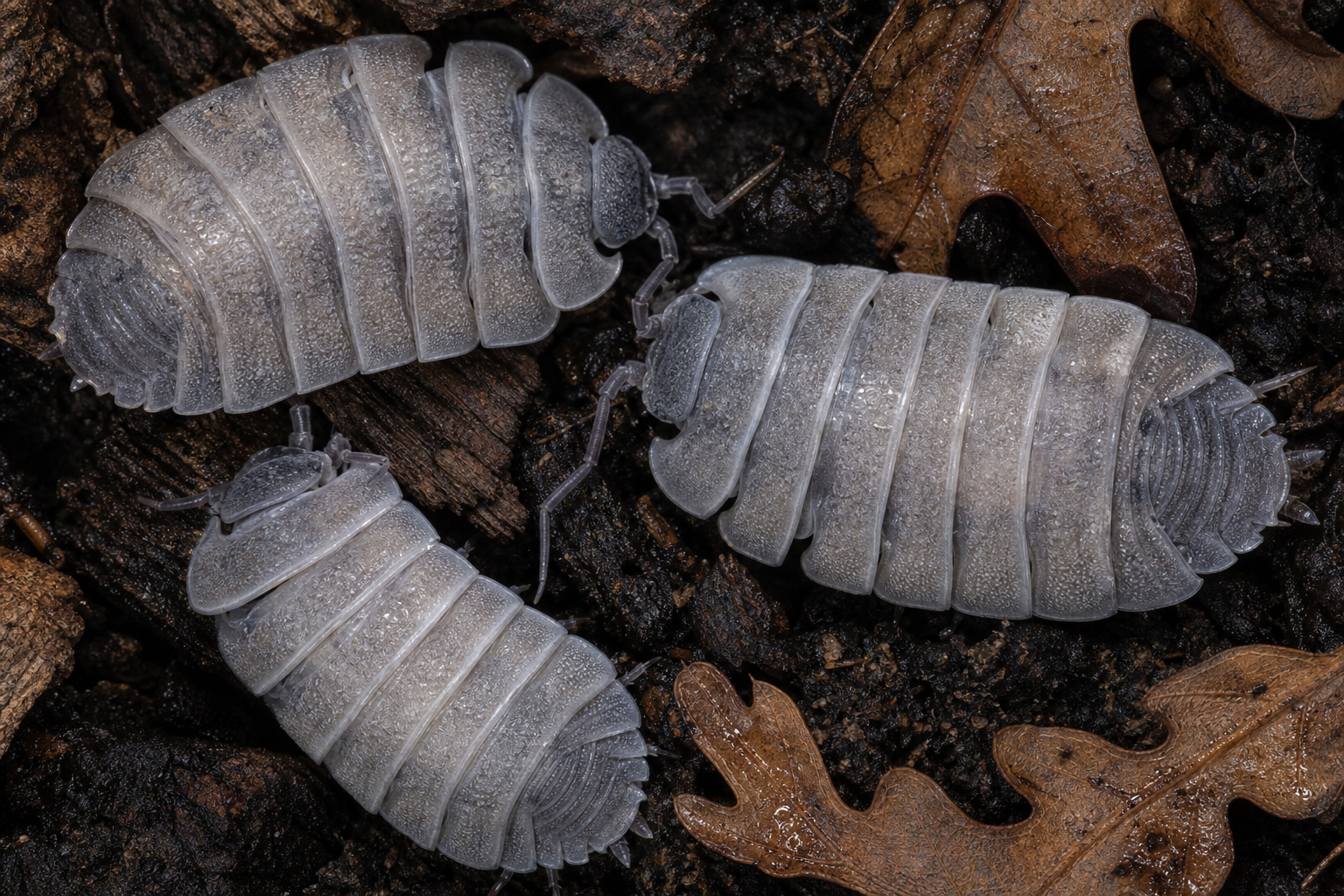
Porcellio is one of the most familiar genera of terrestrial isopods in the hobby. These flatten-bodied crustaceans are valued for their active movement, varied colour morphs, and usefulness in bioactive terrariums where they break down leaf litter and uneaten food.
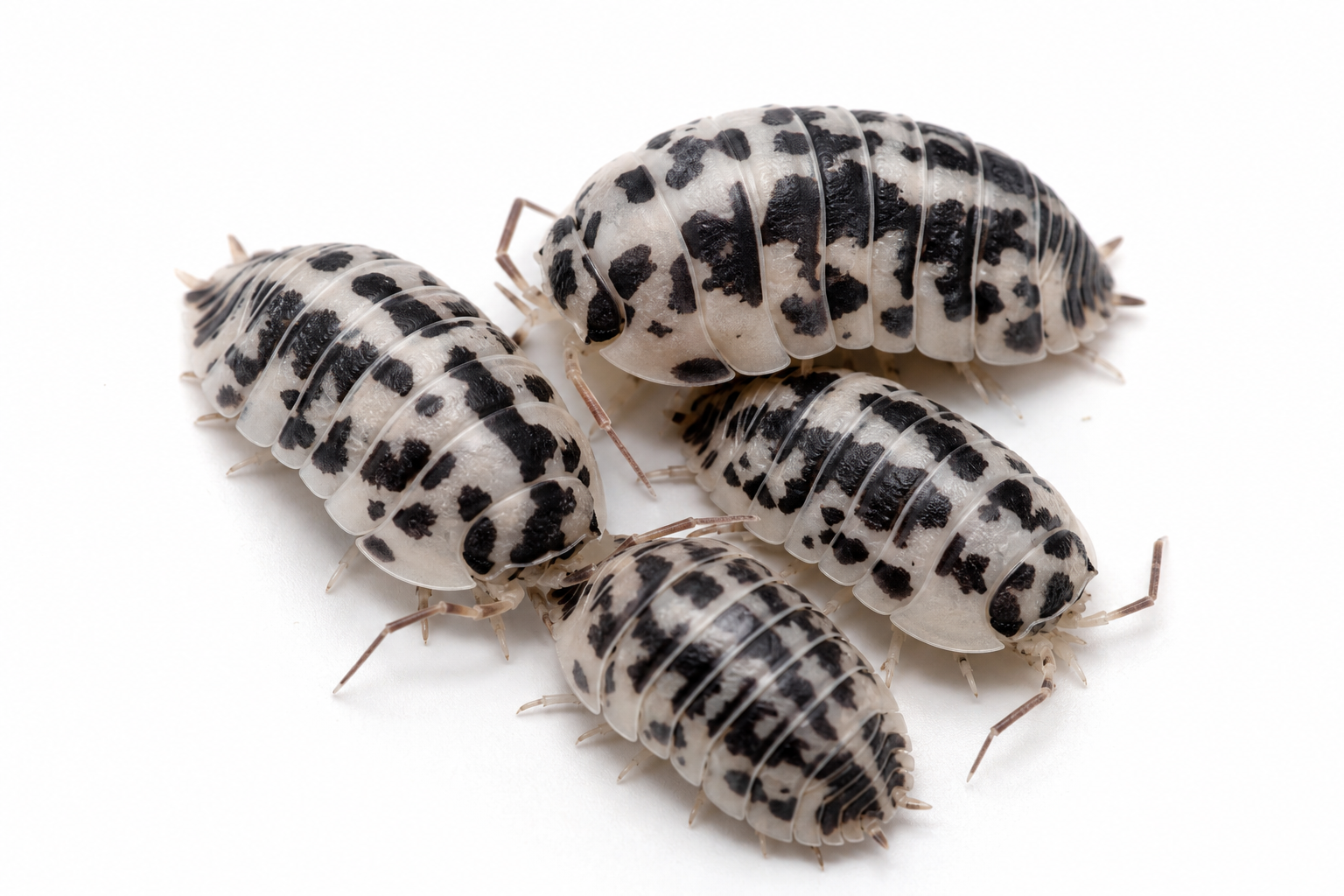
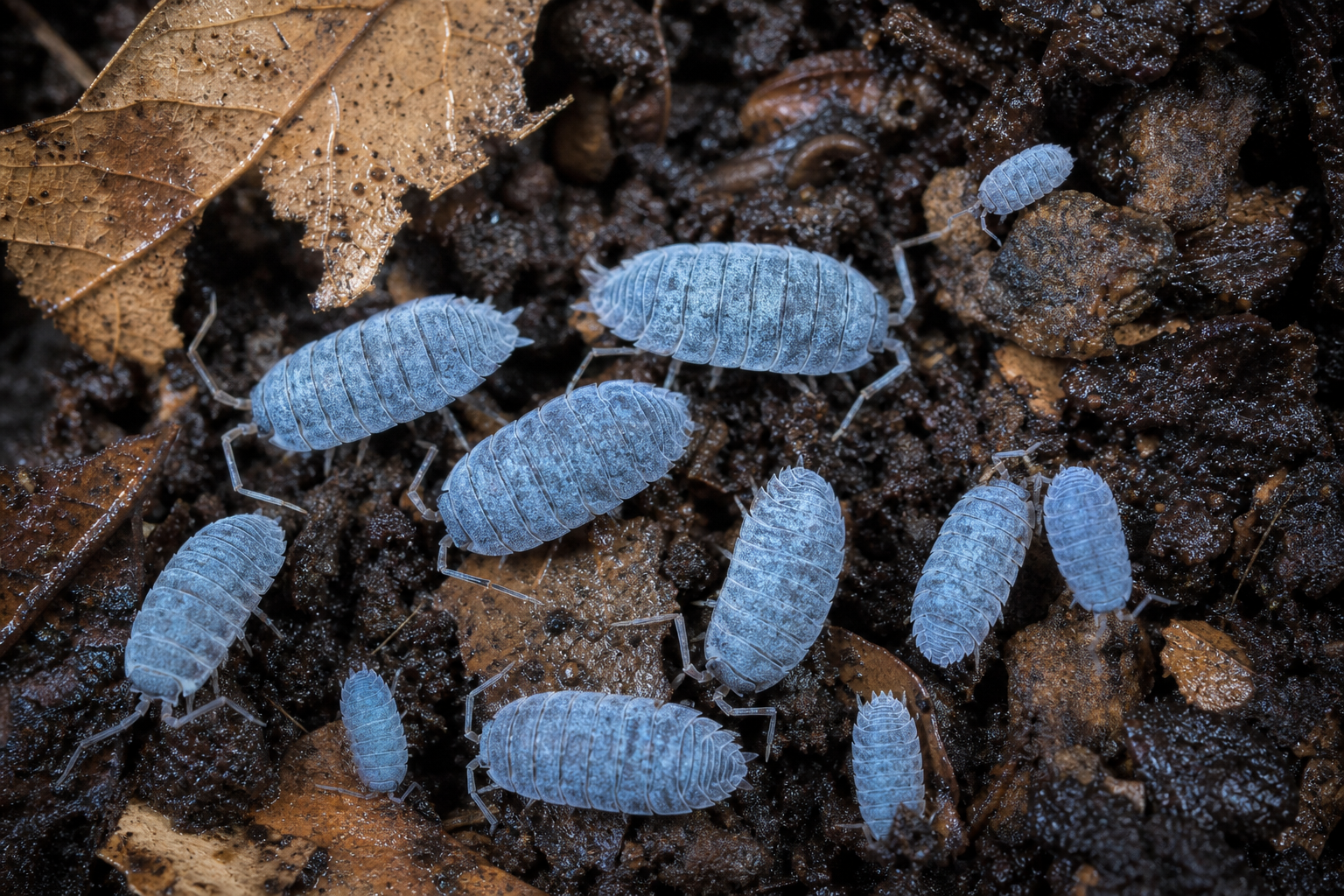
Species in this genus are typically larger and bolder than many Armadillidium, with a rigid, slightly arched dorsal surface and antennae that stay busy as they explore. Wild populations span temperate Europe and the Mediterranean, and captive cultures have made morphs like Porcellio scaber "Lava", Porcellio laevis "Dairy Cow", and Porcellio dilatatus household names among keepers.
Porcellio species are detritivores: they thrive on decaying plant matter, softened hardwood, and occasional protein. Most do well with a moisture gradient — one damp end and one drier end — inside a ventilated plastic tub.
Why Porcellio is popular in the hobby
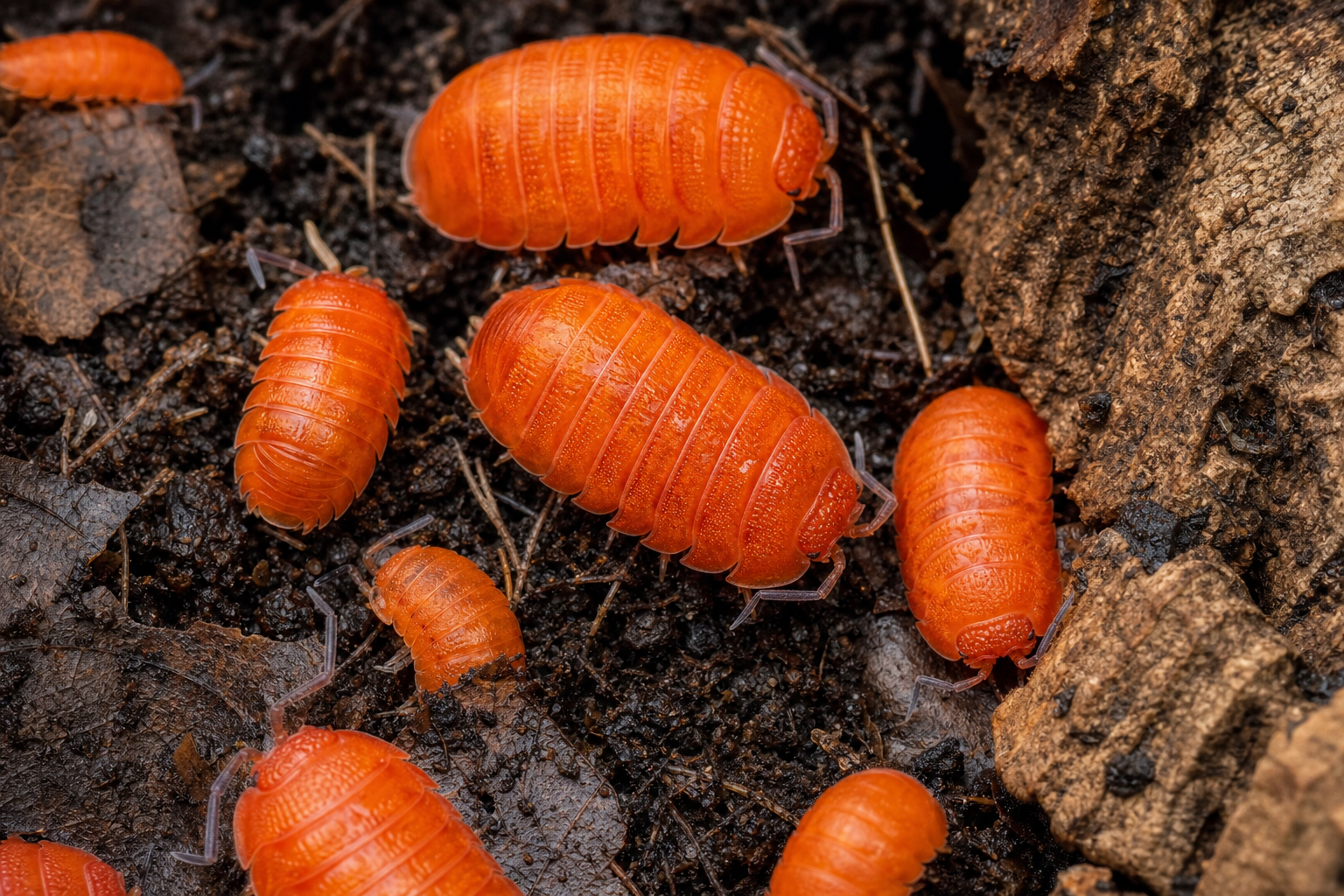
Collectors gravitate toward Porcellio because the genus balances hardiness with visual variety. Beginner-friendly species reproduce steadily and tolerate minor husbandry mistakes, while selective breeding has produced vivid oranges, speckled patterns, and unusually large forms like Giant Canyon (P. dilatatus).
They are excellent display animals: groups forage openly, grow to a size that is easy to observe, and pair naturally with springtails in cleanup-crew setups. Protein-loving species such as P. scaber often show brighter colouration when offered a light supplemental diet alongside leaf litter.
Habitat, care, and collection appeal
A solid Porcellio setup uses 5–10 cm of bioactive substrate, plenty of oak leaf litter, and cork bark for cover. Ventilation matters — stale, soggy air leads to mould even when humidity is high on one side of the tub.
Temperatures around 18–25 °C suit most species. Calcium from cuttlebone supports clean moults. For collectors, Porcellio offers an approachable entry point into isopod keeping with room to specialise into rarer morphs as experience grows.