Introduction
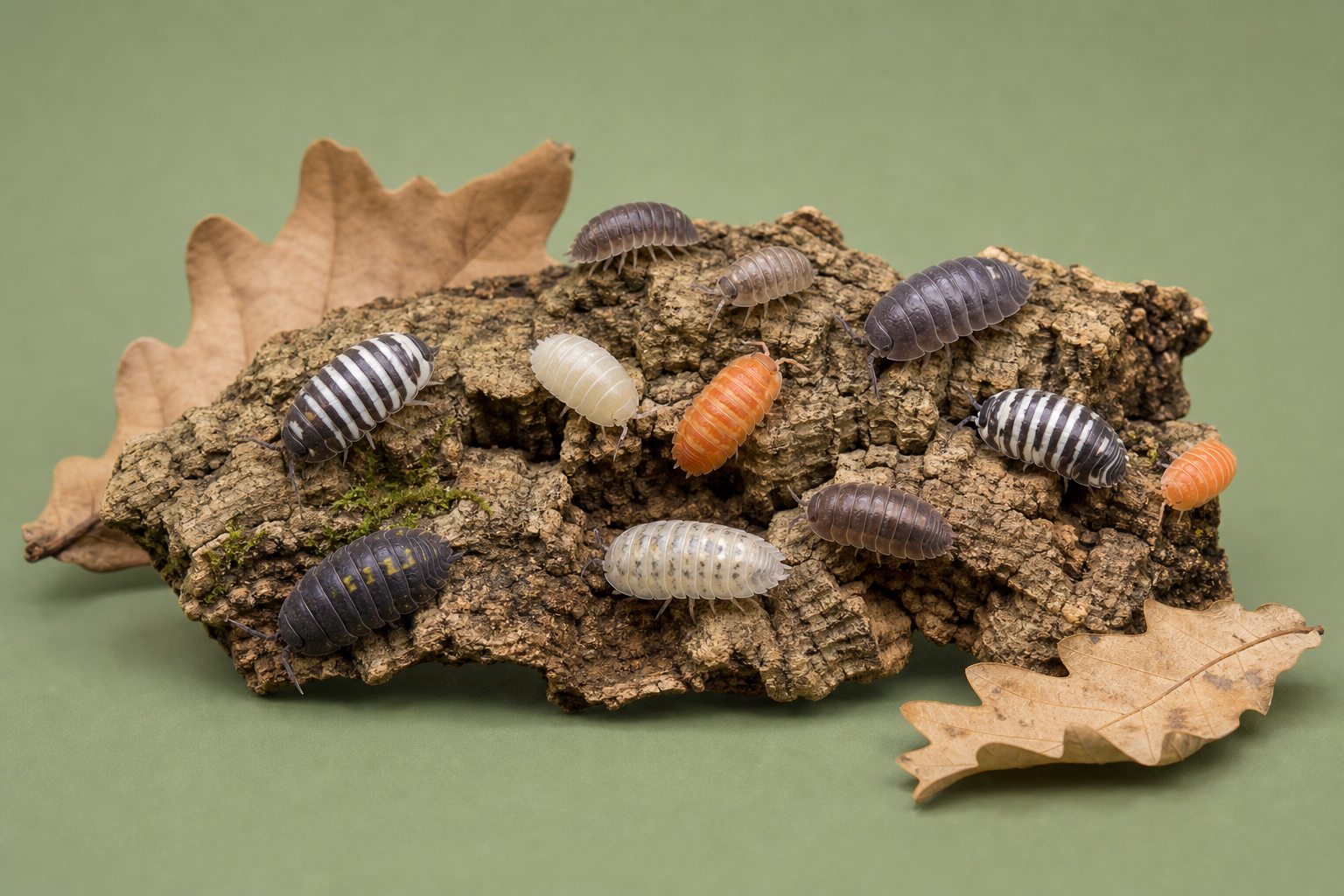
Isopods are terrestrial crustaceans kept as pets, clean-up crews, and classroom critters. Hobby species range from European temperate types to tropical imports from Southeast Asia. This guide covers the stuff that works for most of them.
Housing
A ventilated plastic tub or glass terrarium is the standard. Airflow stops stale pockets and gas buildup, which is the biggest long-term killer of colonies.
- Starter size: 6 US quart (~5.7 L) tub for most species
- Large species / established colonies: 12 qt or larger
- Substrate depth: 4–8 cm depending on species
The moisture gradient
Most isopods want a moist side and a dry side. They move between the two as they need. Mist the damp corner when it dries out. Only flood the whole tub if you are keeping something that actually needs constant wet.
Diet
Staple: Leaf litter (oak is the usual pick) and decaying hardwood.
Supplements:
- Vegetables: squash, carrot, zucchini (remove within 48 hours)
- Protein: fish flakes, dried shrimp, quality isopod diet mix
- Calcium: cuttlebone or limestone. Cubaris especially need this.
Temperature
Most hobby species are happy at 18–26°C (65–80°F), which is normal room temp in most Canadian homes. Keep tubs out of direct sun, away from radiators, and out of cold garages in winter.
Springtails as clean-up crew
Springtails eat mould and break down waste. Match temperate springtails (Folsomia candida) with temperate isopods; tropical springtails (Sinella curviseta) with Cubaris and other humid setups.
Common issues
- Mould: Overfeeding or poor ventilation. Feed less, add springtails, open up airflow.
- Mass die-off: Usually stale air or sour substrate. Rehouse survivors on fresh substrate immediately.
- No breeding: Colony still settling, wrong humidity, or too much disturbance. Give it time.
- Mites: Often from overfeeding. Cut food back; they are usually harmless but ugly.