Pronunciation
fol-SOH-mee-uh
/fɒlˈsoʊmiə/
Where they're found
Cosmopolitan soil springtails; Folsomia candida is a standard temperate cleanup crew in labs and terrariums worldwide.
Orange pins mark representative locations; this genus occurs widely across suitable habitats.
- Western Europe
- Northeastern North America
- Central Europe
- Australia

Understanding the Folsomia genus
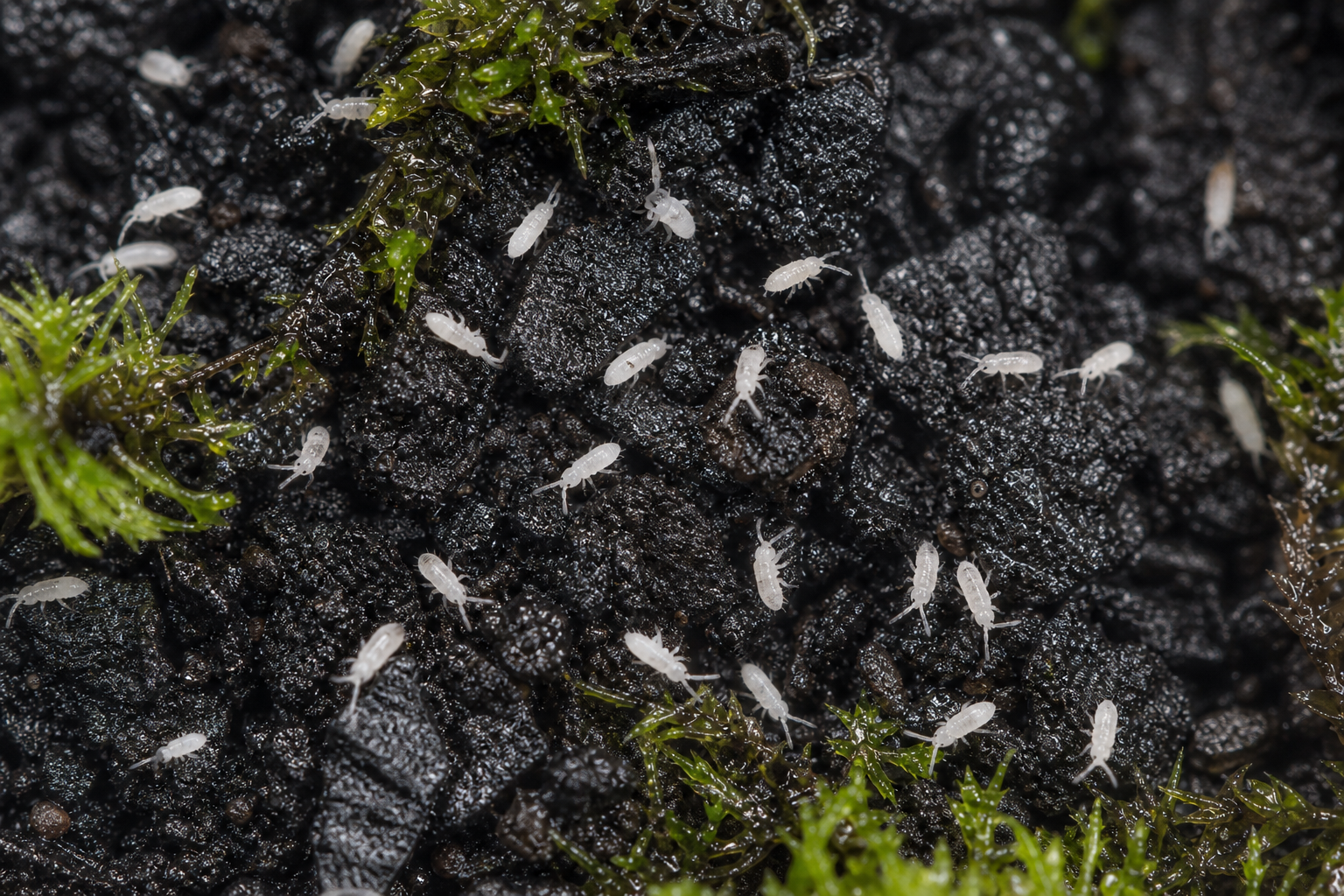
Folsomia is a genus of tiny hexapods (springtails) that live in soil and leaf litter. Folsomia candida — the temperate white springtail — is cultured by the millions as a mould grazer in isopod tubs and bioactive terrariums.
Springtails are not insects; they belong to Collembola and lack wings, instead using a forked springing organ (furcula) to hop when disturbed. At under a millimetre long, they look like moving dust until you lean in.
F. candida reproduces rapidly on charcoal-clay substrate with brewer's yeast, making it the default pairing for temperate isopod colonies.
Why Folsomia is popular in the hobby
Temperate white springtails outcompete mould on damp substrate before it overwhelms slow-moving isopod cultures. They are cheap to maintain, harmless to reptiles and amphibians in bioactive setups, and ship well in starter cultures.
Almost every Armadillidium or Porcellio keeper eventually adds Folsomia — they are the invisible cleanup crew that makes beginner tubs more forgiving.
Habitat, care, and collection appeal
Culture in a ventilated 32 oz cup on charcoal substrate kept evenly moist. Feed a pinch of brewer's yeast weekly. Introduce to isopod tubs by tipping substrate from an established culture onto the damp side.
Keep below roughly 24 °C for best breeding. For hobbyists, Folsomia is essential infrastructure — not flashy, but the difference between a mouldy tub and a stable mini-ecosystem.