Pronunciation
por-sel-ee-ON-ih-deez
/pɔːrˌsɛliˈɒnɪdiːz/
Where they're found
Cosmopolitan — found on every continent in human-associated and natural habitats; among the most widespread isopod genera on Earth.
Orange pins mark representative locations; this genus occurs widely across suitable habitats.
- United Kingdom
- Eastern North America
- South Africa
- Japan
- Australia

Understanding the Porcellionides genus
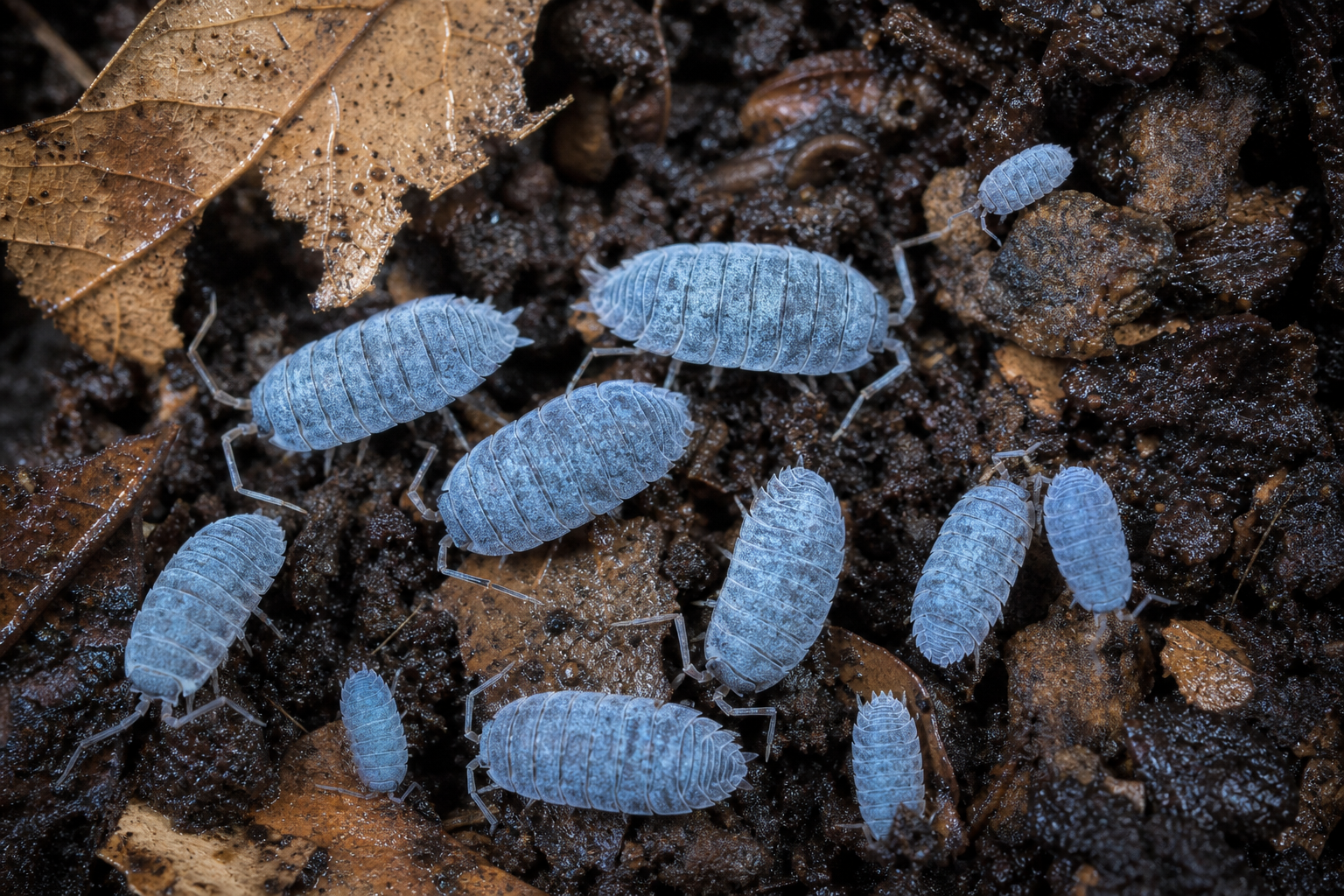
Porcellionides is a genus of fast, smooth-bodied isopods that has spread to virtually every corner of the globe. P. pruinosus — including the hobby favourite "Powder Blue" line — is prized as a prolific cleanup crew in bioactive terrariums.
Unlike conglobating pill bugs, Porcellionides stay flattened and quick, slipping into crevices rather than rolling up. A fine waxy coating on many forms gives them a dusty, powdery appearance that stands out under light.
Their adaptability is remarkable: they tolerate a broader humidity and temperature window than many tropical specialists, which is why breeders use them as starter cultures and feeder/cleaner stocks.
Why Porcellionides is popular in the hobby
Speed and productivity are the selling points. Colonies explode in population when food and leaf litter are steady, making Powder Blue one of the most economical isopods for large bioactive builds.
They are less shy than many Cubaris, so keepers see constant activity. Colour morphs beyond powder blue exist in the trade, but the blue pruinosus line remains the benchmark for beginners who want results fast.
Habitat, care, and collection appeal
A standard 6 qt ventilated tub with bioactive substrate, oak leaves, and moderate humidity suits most cultures. They appreciate protein supplements but do not require the heavy limestone inputs that Cubaris need.
Because wild populations are cosmopolitan, thinking about biosecurity still matters — always source captive-bred stock rather than collecting outdoors. In collections, Porcellionides fills the role of reliable workhorse species that keeps terrariums clean and interesting.