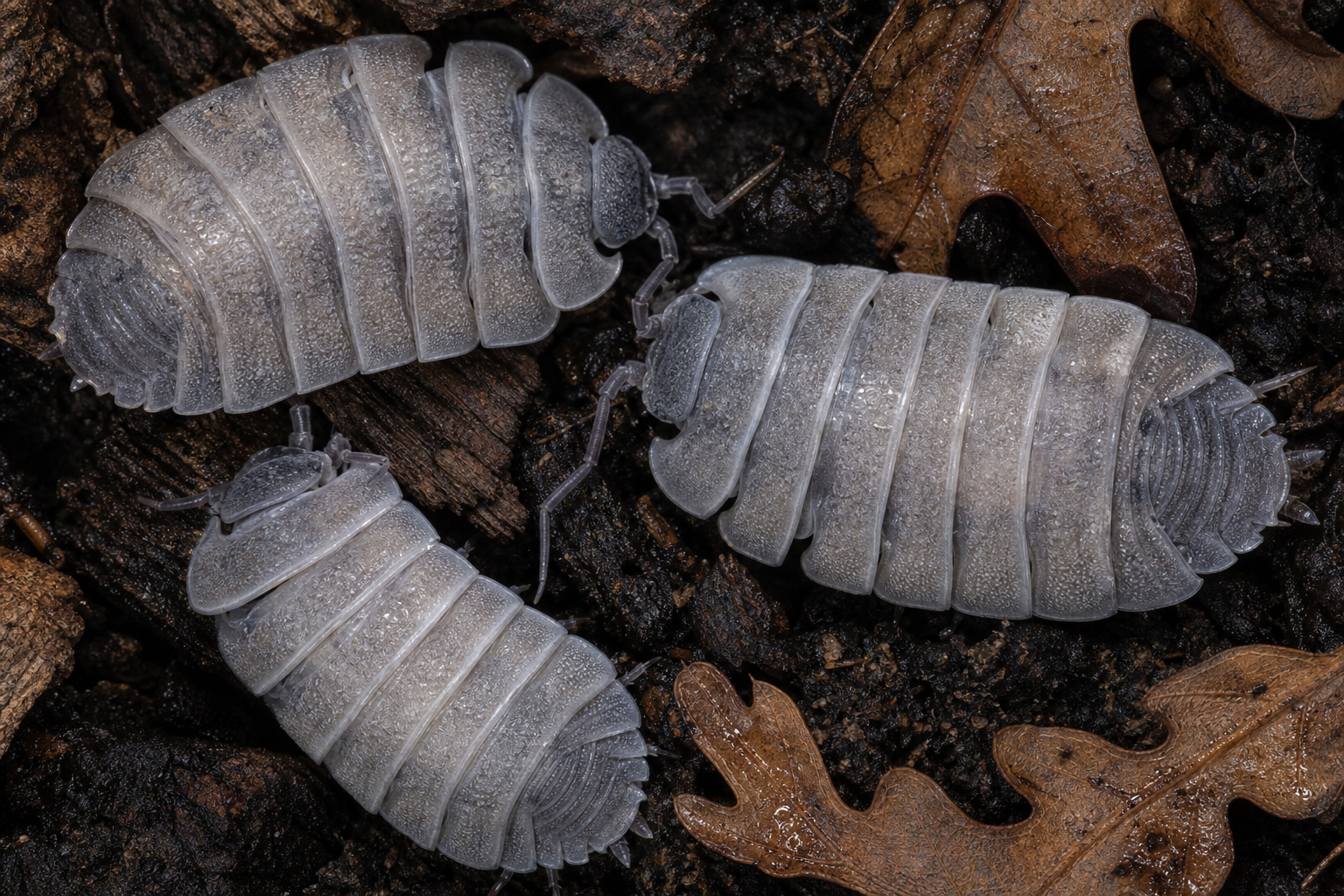
About Giant Canyon Isopods
Porcellio dilatatus (Giant Canyon) is among the largest isopods commonly kept, up to about 20 mm. They eat a lot, move around in daylight more than most species, and suit larger bioactive setups.
Natural history & background
Giant Canyons live on forest floors and rocky canyon edges in Europe. Their size means they need more space and food than smaller Porcellio.
Housing & enclosure setup
Porcellio do well in ventilated tubs or glass terrariums with a clear moisture gradient. A 6 qt tub fits most species; big ones like P. dilatatus appreciate a 12 qt.
Use 4–8 cm of substrate with leaf litter, bark hides, and cuttlebone in the damp corner.
Substrate & environment
Coconut coir, peat, or topsoil mixed with decaying wood and leaf litter. Porcellio want a dry side and a damp side. That split matters for moulting and breeding.
Temperature & humidity
- Temperature: 18–25°C (65–77°F). Room temp is usually fine.
- Humidity: Moderate; 50–70% with a damp corner. Do not soak the whole tub.
Diet & nutrition
Porcellio eat more protein than Armadillidium.
Staple: Leaf litter and decaying wood.
Supplements (2–3× weekly):
- Vegetables and fruits (squash, carrot, apple)
- Protein: fish flakes, dried shrimp, dog/cat kibble (sparingly)
- Calcium: cuttlebone, always available
Breeding & colony management
Once settled, Porcellio breed fast. Large broods (20–60+ mancae) are normal for P. scaber and P. dilatatus.
- Colonies can explode in number. Plan extra tubs, trades, or sales.
- You can harvest from a mature culture without wiping out breeders.
Common issues & troubleshooting
Dry exoskeleton / failed moults
- Not enough moisture on the damp side. Mist more often and check the gradient.
Population boom then crash
- Overcrowding or not enough food. Split the colony or thin it out.
Colour fading (morphs)
- Often diet or calcium. Offer more protein and keep cuttlebone in the tub.
Predation on mancae
- Usually overcrowding or starvation. Add hides and feed on a steady schedule.
Morph-specific notes
- Use a 12 qt tub or larger for mature colonies.
- Feed generously. Big isopods eat more leaf litter and protein.
- They are bold and less shy, so they are nice to watch.